
Microneedling vs. Chemical Peels: Which Builds Collagen Faster?
Which Builds Collagen Faster: Microneedling or Chemical Peels?
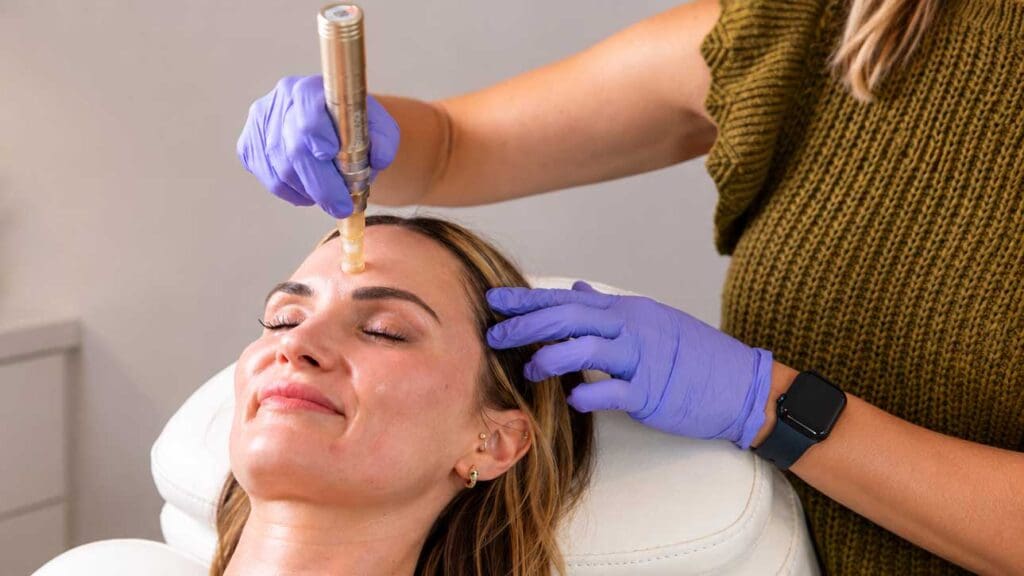
Microneedling builds collagen faster and more directly than chemical peels, since it works below the skin’s surface to trigger new collagen and elastin production. Chemical peels focus on exfoliating the top layer, which improves tone and texture but doesn’t rebuild structure the same way.
Both treatments have their place. The right one depends on what your skin actually needs.
If collagen loss and texture are your main concerns, our microneedling treatment page walks through exactly how the process works.
How Microneedling Builds Collagen
Microneedling uses a device with fine needles to create thousands of controlled micro-injuries in your skin. Your body reads those tiny injuries as damage and responds by producing new collagen and elastin to repair the area.
That rebuilding process happens deep in the dermis, not just on the surface. It’s why microneedling tends to deliver more structural improvement for scarring, firmness, and pore size.
Results build gradually, with most patients noticing improved texture within two to three weeks and continued improvement over the following months.
How Chemical Peels Improve Skin (and Where They Fall Short on Collagen)
Chemical peels apply an acid solution that loosens and removes damaged surface cells, revealing fresher skin underneath. That process brightens dull skin, evens out tone, and softens fine surface lines almost immediately.
What peels don’t do well is rebuild collagen at a structural level. They work on the epidermis, the outermost layer, so deeper concerns like acne scarring or significant volume loss don’t respond as strongly.
Peels shine as a maintenance treatment or a quick reset. They’re just not the tool for long-term collagen rebuilding.
What Each Treatment Is Best For
Choosing between the two comes down to matching the treatment to your specific concern. Here’s how they typically break down.
- Microneedling: acne scarring, deep texture issues, enlarged pores, collagen loss, fine lines
- Chemical peels: sun spots, dullness, melasma, surface-level tone, mild breakouts
If you’re dealing with more than one of these at once, that’s usually a sign a combined plan makes sense.
Microneedling vs. Chemical Peels at a Glance
Microneedling vs. Chemical Peels Comparison
| Feature | Microneedling | Chemical Peels |
| Mechanism | Micro-injuries trigger collagen | Acid exfoliates surface cells |
| Collagen Impact | Strong, structural rebuilding | Minimal, surface-focused |
| Downtime | 1-2 days, mild redness | Light peels: minimal; deep peels: 1-2 weeks |
| Sessions Needed | 3-4, spaced 4-6 weeks apart | 4-6 light peels, spaced 4-6 weeks apart |
| Cost Range | $300-$500 per session | $150-$400 per session |
| Best For | Scarring, texture, pores | Sun spots, dullness, tone |
Can You Combine Microneedling and Chemical Peels?
Yes, and for a lot of patients, combining the two delivers better results than either treatment alone. A common approach starts with a chemical peel to exfoliate and brighten, followed by microneedling several weeks later to rebuild collagen underneath.
That sequencing lets each treatment do what it’s actually good at instead of asking one to do both jobs. A chemical peel consultation is a good place to start if you’re not sure which order makes sense for your skin.

Melrose Aesthetics: Collagen-Building Treatments for Nashville Skin
Melrose Aesthetics builds every treatment plan around your specific skin, not a one-size-fits-all protocol. Whether your goals call for microneedling, a chemical peel, or both working together, our providers will map out a plan that actually fits what your skin needs.
Want to see everything we offer? Browse our full range of treatments and find your starting point.
FAQs: Microneedling vs. Chemical Peels
Is microneedling or a chemical peel better for acne scars?
Microneedling is generally better for acne scars, especially indented or atrophic scarring, since it rebuilds collagen at a deeper level than a peel can reach.
Which treatment has more downtime?
Microneedling typically involves one to two days of mild redness, while chemical peel downtime depends on depth, ranging from none for light peels to one to two weeks for deeper ones.
Can I switch between microneedling and chemical peels?
Yes, many patients alternate between the two or combine them in a single treatment plan to address both surface tone and deeper collagen loss.
How soon will I see collagen results from microneedling?
Most patients notice improved texture within two to three weeks, with full collagen-building results developing over three to four sessions.


