
Hydrafacial for Acne-Prone Skin: Does It Actually Help?
Is Hydrafacial Good for Acne-Prone Skin?
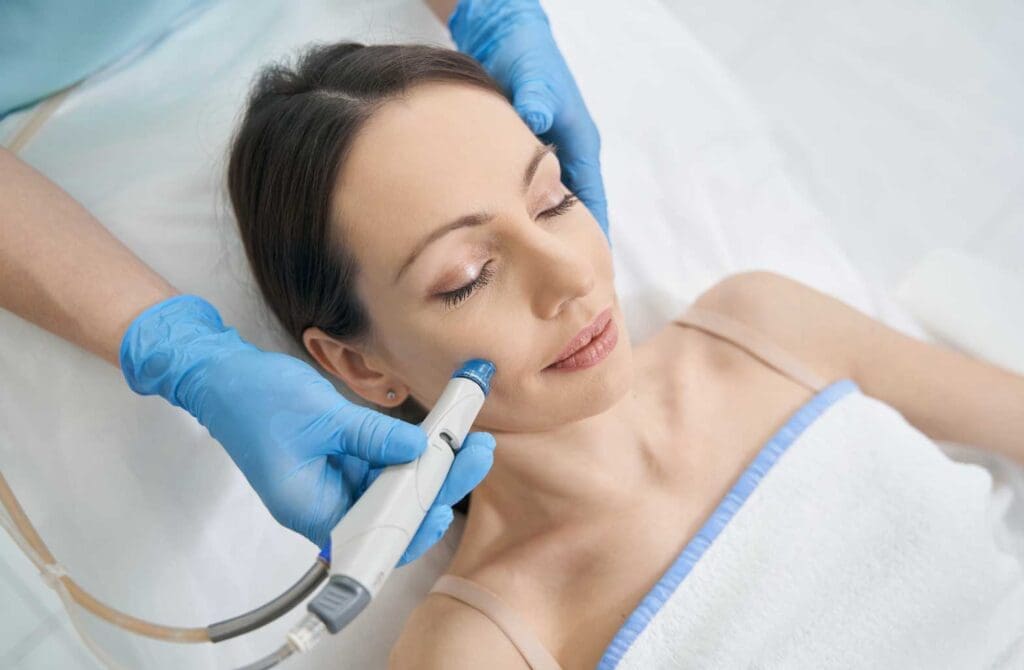
Yes — Hydrafacial is genuinely effective for acne-prone skin, and the reason comes down to what the treatment actually does at each step. Rather than sitting on the surface, Hydrafacial works through a multi-step process that deep cleans pores, extracts congestion without manual squeezing, and infuses targeted serums that address the inflammation and bacterial activity driving breakouts.
For skin that tends to clog easily, react to harsh treatments, or cycle between clearing up and flaring back, Hydrafacial offers a method that improves the skin without aggravating it.
At Melrose Aesthetics, our Nashville Hydrafacial treatment is customized to your skin — including boosters specifically chosen for acne-prone patients.
Why Acne-Prone Skin Responds Well to Hydrafacial
Acne-prone skin operates in a frustrating loop. Excess sebum production mixes with dead skin cells to clog pores, creating the environment where acne-causing bacteria thrive. Add inflammation to that equation and you get active breakouts, persistent redness, and the kind of congestion that makes most standard facials feel like a risk.
Hydrafacial interrupts that loop at multiple points simultaneously. The cleansing and exfoliation phase removes dead skin cell buildup before it develops into a breakout.
The extraction phase pulls existing debris from pores using vortex suction — far more controlled and less traumatic than manual extractions. The infusion phase then delivers serums directly into freshly cleared pores, where they can actually work.
For acne-prone skin, those serums typically include salicylic acid and clarifying ingredients that regulate oil production and calm inflammation rather than stripping the skin and triggering more oil as a defensive response.
What Hydrafacial Does at Each Step for Acne-Prone Skin
Every step of the Hydrafacial process contributes something specific for acne-prone patients. Here is what each stage delivers:
- Cleanse and peel — loosens dead skin cells and surface debris that accumulate in pores without disrupting the moisture barrier
- Extract — vortex suction clears blackheads, whiteheads, and deep congestion without the trauma of manual squeezing
- Hydrate — salicylic acid boosters and clarifying serums are infused directly into cleared pores to regulate sebum and calm inflammation
- Red and blue LED light — blue light targets acne-causing bacteria; red light reduces inflammation and supports healing of active breakouts
- Nanoneedling add-on (optional) — refines texture, minimizes pores, and drives serum absorption deeper for patients dealing with persistent congestion or post-acne marks
Booster selection at Melrose is never generic. Acne-prone patients are paired with clarifying and anti-inflammatory serums that reflect what the skin actually needs.
Will Hydrafacial Cause a Breakout After Treatment?
Some patients experience mild breakout activity after their first Hydrafacial, and that response is worth understanding rather than fearing. When congestion sitting in pores gets loosened and drawn to the surface, it can temporarily appear as small blemishes in the days following treatment. That is a purge — a sign the treatment cleared material that was already there, not a sign that Hydrafacial is wrong for your skin.
A purge is temporary and resolves within a few days. It differs from a reaction, which would involve widespread irritation or breakout patterns inconsistent with your usual skin behavior, and is rare. If you have a known ingredient sensitivity, flagging it at your consultation lets your Melrose provider adjust the booster selection accordingly. For most patients, any post-treatment activity normalizes after the first session and skin clarity improves with each visit after that.
How Often Should Acne-Prone Skin Get a Hydrafacial?
For acne-prone skin, monthly Hydrafacial treatment produces the most consistent results. Skin renews itself on a roughly 28 to 30 day cycle, and aligning treatment with that rhythm means each session addresses fresh congestion before it develops into active breakouts and maintains the clarity built in the previous session.
Patients who stretch sessions to every six or eight weeks often find they spend each treatment catching up rather than building forward. Over three to four months of monthly sessions, baseline congestion drops, oil production becomes more regulated, and breakout frequency typically decreases meaningfully. Your Melrose provider tracks how your skin responds and adjusts the approach as your skin’s needs shift.
For a deeper look at Hydrafacial frequency by skin type, this guide covers what to know before booking.
Hydrafacial for Acne-Prone Skin at Melrose Aesthetics in Nashville
Acne-prone skin needs a provider who pays attention to it specifically, and that is the approach at Melrose Aesthetics.
Katie, Lindsey, and Haley are board-certified Nurse Practitioners who build every Hydrafacial around the individual patient — the boosters selected, the add-ons recommended, and the treatment rhythm all reflect what your skin actually needs. Located at 805 Bradford Ave in Nashville, Melrose is a trusted resource for patients who want real skin improvement without being upsold on treatments they don’t need.
Book your Hydrafacial at Melrose Aesthetics in Nashville today by calling 615-592-1989 or scheduling online.
FAQs: Hydrafacial for Acne-Prone Skin
Can Hydrafacial help with acne scars?
Hydrafacial improves mild post-acne marks and discoloration through regular exfoliation and targeted serum infusion over a series of sessions. For scarring with textural depth, adding nanoneedling or incorporating microneedling as a separate treatment will produce more significant improvement.
Is Hydrafacial safe for active breakouts?
Yes — the extraction and blue LED light steps specifically address the bacteria and congestion contributing to active breakouts. Providers at Melrose adjust the approach based on severity to avoid irritating inflamed areas while still treating the surrounding skin effectively.
What Hydrafacial booster is best for acne-prone skin?
Salicylic acid-based clarifying boosters are typically the strongest choice because salicylic acid is oil-soluble and penetrates pores to dissolve sebum and debris. Anti-inflammatory and brightening boosters are often paired for patients dealing with both active acne and post-breakout redness.
How is Hydrafacial different from a regular facial for acne?
A standard facial relies on manual extractions and surface-level product application. Hydrafacial uses vortex suction to extract more precisely and without trauma, then infuses active serums directly into the pore. The result is deeper cleansing and more targeted ingredient delivery — a meaningful difference for reactive skin.


